Anzhi - Liverpool 1 @ 2.50
SURE : 100%
Thursday, November 8, 2012

Monday, October 22, 2012
Zidane: I have no problem with Mourinho
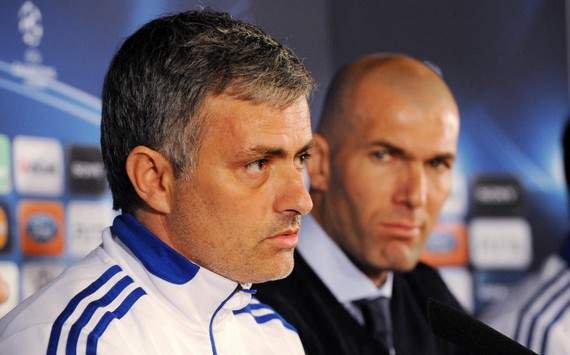
The legendary Frenchman has stressed that his relationship with the former Inter boss has not turned sour as he's learned a lot from the Madrid coach
Zinedine Zidane has insisted that he does not have any problems with Real Madrid coach Jose Mourinho, before adding that he has learned a lot from the Portuguese trainer.
A number of recent reports suggested that Zidane had left Madrid after falling out with Mourinho, but the former France international has made it clear there is no truth in the reports saying the duo have a troublesome relationship.
"I do not have a problem with Mourinho. On the contrary, I have learned a lot from him," Zidane was quoted as saying by Sport365.
"It is my passion to stand on the pitch on a daily basis. That's why I opted to return to France to form myself as a coach."
Zidane, 40, made over 200 official appearances for Real Madrid between 2001 and 2006.
"I do not have a problem with Mourinho. On the contrary, I have learned a lot from him," Zidane was quoted as saying by Sport365.
"It is my passion to stand on the pitch on a daily basis. That's why I opted to return to France to form myself as a coach."
Zidane, 40, made over 200 official appearances for Real Madrid between 2001 and 2006.
Tuesday, October 16, 2012
Abidal's agent comments on his client's return to football
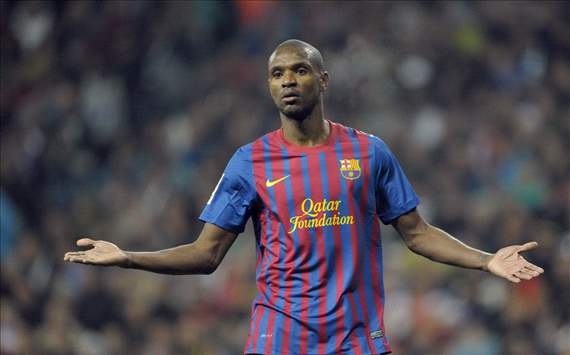
The Blaugrana defender's representative has released a statement regarding the player's potential future at stepping back on the field.
Barcelona defender Eric Abidal's agent and best friend David Venditelli has given an outlook concerning a possible return to soccer for the France international.
The 33-year-old Frenchman was diagnosed with having a tumor on his liver back in March, 2011, after which he received well wishes from people all over the world, who are highly anticipating his recovery. He made a stunning return to the field just months later, but he required a liver transplant this past March before recently returning to training last week.
"His main objective is clearly to play again, but we don't know yet if it is possible," Venditelli toldFrance Football.
Venditelli then went on to express his worry regarding his client's ability to engage in the physical part of the sport.
"There are still some questions without answers," Venditelli said. "What will happen in the first contact? Will he have fear? Will he be dedicated in the duels like he has always been? I think he will come back. He is so eager to prove this to himself than i think he can make it."
"His main objective is clearly to play again, but we don't know yet if it is possible," Venditelli toldFrance Football.
Venditelli then went on to express his worry regarding his client's ability to engage in the physical part of the sport.
"There are still some questions without answers," Venditelli said. "What will happen in the first contact? Will he have fear? Will he be dedicated in the duels like he has always been? I think he will come back. He is so eager to prove this to himself than i think he can make it."
Panda conservation is not 'greenwash'

The man behind the deal that brought two pandas to a Scottish zoo has defended panda conservation against allegations of "greenwash".
Iain Valentine, Director of Animal Conservation at Edinburgh Zoo said the panda brought money into conservation.
Biologist and TV presenter, Simon Watt, warned against Chinese "greenwash" when weighing up the value of conservation projects.
The comments were made at a debate held during Biology Week.
The event "Do we need pandas? Choosing which species to save" was held at the Linnean Society on Monday 15 October 2012 and was organised by the Society of Biology.
Simon Watt was on the four-person panel and made his comments in answer to a question from the audience.

"Chinese greenwash, that's the kind of stuff we need to be thinking of," he said.
Greenwash is the deceptive marketing of green public image, when more substantial environmental policies are not being implemented.
"If we're going to be putting poster boys [such as pandas] on pedestals they're not going to be just used for good things".
He said that the pandas could distract attention from other areas where conservation money could be better spent.
Conservation 'cash cow'
Edinburgh Zoo's Director of Animal Conservation Mr Valentine, who was in the audience, explained from the floor of the debate that this did not match his experience of panda conservation.
"The pandas are paying for themselves. We're not taking our money away from any other species."
"The money that the pandas are making for us is going straight back to panda conservation, it's not detracting away from any other money in any of our other projects," he said.
Speaking after the event, he explained that pandas are a conservation "cash cow".
"I don't think pandas are a model for how conservation can be funded... they are unique within the animal world as they have an appeal which is unmatched by any other species."
"Panda conservation work needs to be held up as an great example of what can be done in terms of the conservation of a species. It's holistic, it's embracing all of the issues and it's working," he said.
"It's a good indication of the environmental credentials of the Chinese," he added.
Sitting on the panel with Simon Watt at the debate were environmental expert Dr Mark Avery, presenter and scientist Dr Yan Wong and Dr Sandra Knapp, Head of Plants Division at the Natural History Museum.
The discussion focused on the importance of conservation efforts to preserve habitats as part of an effort to save species.
"The panda debate turns into [a question of] if we concentrate on conserving pandas, do we end up conserving habitat?" said Dr Wong.
This concern for habitat is driven by concern for biodiversity.
"I think we have to focus where we get most biology for our buck," Simon Watt said, suggesting less well-known conservation projects such as Yasuni National Park, a biodiversity hotspot in Ecuador, which has 2,200 different species of tree.
"The panda's home is worth protecting but I think there are other places that are probably more worth protecting," he commented.
Speaking after the event, Mr Valentine said that panda reserves can also have very positive consequences on other species in their habitat using Wolong "the most important panda reserve" as an example.
"Its a world UNESCO site and a biosphere reserve because of its importance to pandas but also its importance for plants and many animal species."
"I would like to think it would exist even if pandas were not there as its so damned important but the fact is that it does have pandas and that just puts the icing on the cake."
Food price crisis: What crisis?

Without water, crops cannot grow and the world cannot eat. And this year, there hasn't been enough of it.
The US has seen its worst drought in more than 50 years, vast swathes of Russia have been left parched by lack of rain, India has had a dry monsoon, while rainfall in South America early in the year fell well below expectations.
As a direct result, harvests of many crops have been decimated, forcing the price of some cereals back up towards levels last seen four years ago, a time when high prices sparked riots in 12 countries across the world and forced the United Nations to call a food price crisis summit.
The lack of rain this year has raised fears we are rapidly heading for another price crunch.
The focus has been on US corn production, which has been all but wiped out in many regions. In fact, US corn inventories are running at just 6% of annual consumption, well below the 25% that is generally considered an appropriate buffer.
Soya-bean production is also well down, while grain production in Asia has been hammered, with yields in some countries down by more than 50%.
.jpg)
And yet most experts agree the situation is nothing like as dire as it was four years ago, nor in fact two years ago when droughts again hit food production hard, sending prices to record highs.
Prices are measured against expectations, and harvests have not been as bad as many had feared. More importantly, stocks are in better shape. Perhaps most importantly, key producers, in particular Russia, have not imposed the kinds of export bans that helped trigger previous price hikes.
These were particularly damaging as the world has become more dependent for its grain on the Commonwealth of Independent States, which includes some of the world's biggest producers of wheat, including Russia, Kazakhstan and unofficial member Ukraine.
"Big producers have been battered by drought but they are honouring their export contracts," says James Walton, chief economist at food experts IGD.
"If Russia or central Asian countries were going to do something, they would probably have done it by now."
The Agricultural Market Information System, which was established last year and allows the world's major food producers to work off common data as well as providing a forum for discussion, has played an important part.
"Governments are shying away from restrictive measures; supplies are not as bad and inventories are not as bad," says Abdolreza Abbassian, senior economist at the UN Food and Agriculture Organisation.
"Recent experiences have made people a little over sensitive, but [the situation] does not look as bad [as 2008]".
In fact, according to Mr Abbassian, there is no shortage of rice, despite patchy harvests, while inventories of wheat are good, and much higher than in 2007. Sugar production in Brazil has also been much better than expected, while China has generally had a good growing season, Mr Walton adds.
There is also less pressure on prices from biofuels, a "big factor" in the 2008 price spikes, Mr Abbassian says, when a record high for the price of oil drove demand for alternative fuels. Corn and sugar, for example, are used extensively in biofuels - in the US, 40% of all corn production goes into making ethanol. Not only is the oil price well below those highs, but the UN says fewer crops are being diverted towards biofuels.
Overall, then, fears of an impending food price crisis would appear to be exaggerated.
"There has been a lot of talk about food prices at the UN, the International Monetary Fund and the World Bank, and the general feeling is we are not in the same situation we were in in 2008," says Marc Sadler, senior agriculture economist at the World Bank.
Continue reading the main story

But while the chance of food prices returning to levels seen in 2008 and 2011 in the coming months may be slim, they remain at historically high levels, and the underlying factors driving them are here to stay.
Population growth and, more importantly, the rapidly growing middle classes in the developing world, are pushing demand for grain-intensive protein ever higher, while rising energy costs are pushing up the cost of supply. High food prices, therefore, are here to stay.
Long gone are the days of butter mountains and milk lakes as governments fundamentally rethink agricultural policy and cut back on subsidies to farmers.
Global inventories have fallen sharply since the turn of the century as a result - wheat stocks are down by almost a third, rice by more than 40%, and corn by a half.
And these stocks are unlikely to increase. As Mr Sadler says, "even in a good year we just about produce enough food to meet consumption needs".
Margins, therefore, are getting smaller and supplies ever more susceptible to shocks, such as the severe droughts experienced in the past five years. And extreme weather patterns appear to be becoming more commonplace. Experts are wary of blaming climate change, but many believe rising temperatures are having a major impact on rainfall. If they are right, then unpredictable and more extreme weather is here to stay.
'Biggest challenge' People in the developing are far more exposed to rises in the price of food
Those living in the developed West will be relatively unaffected, as produce in the shops is far removed from the raw commodity - wheat is a fairly small component in the cost of a loaf of bread, for example. In fact, the impact on the price of meat is more pronounced, as 5kg of grain are needed to produce 1kg of protein.
Even here, however, there has been a profound change in recent years, according to Mr Walton. "The era of cheap food which we take for granted is over. Food will continue to be available, but don't expect the price to go down," he says.
The impact on those living in poverty in the developing world - those who buy the raw ingredients to make their own produce, and who spend a far greater proportion of their income on food - is far, far greater.
"The global population will soon hit nine billion and everyone has to be fed. Making sure they are is the number one challenge of this century. This is not a question of can we, can't we? We have to," says Mr Sadler.
Dramatically cutting back on food waste, which currently accounts for a third of all food production, would be a start, but a huge increase in investment in global agriculture is also needed. If it fails to materialise, the consequences will be devastating.
Obama team raises expectations for debate with Romney

US President Barack Obama's team says he will make a "strong" comeback in Tuesday's debate rematch with his Republican challenger Mitt Romney.
Top aide Robert Gibbs says he expects Mr Obama to be "energetic" after his passive showing in the first debate.
The rivals will take questions on domestic and foreign policy from an audience of 80 undecided voters at a town hall-style forum in New York.
With 21 days to go until the election, the race is essentially deadlocked.
As he battles for a second term, the Democratic president is trying to hang on to narrow leads in many of the nine key swing states that are expected to decide who will win the White House.
'Passionate'
The 90-minute debate at Hofstra University on Long Island starts at 21:00 EDT on Tuesday (01:00 GMT on Wednesday). It will be moderated by CNN chief political correspondent Candy Crowley.
Continue reading the main storyElection Daily Diet
16 October
Which city has endured 73,000 political ads this year?
See today's Daily Election Diet
The president's campaign dropped the usual pre-debate tactic of lowering expectations, to adopt a more bullish, upbeat tone.
Mr Gibbs, a senior Obama aide, told MSNBC on Tuesday: "I think you will see somebody who will be strong, who will be passionate, who will be energetic."
Mr Romney - who has risen in the opinion polls since his first encounter this month with Mr Obama in Denver, Colorado - will aim to pull off another assured performance.
Mr Obama has been preparing for the debate since Saturday at a golf resort in the city of Williamsburg, Virginia. Mr Romney's advisers are putting him through his paces in his home state of Massachusetts.
"President Obama is going to have a better night than he had at the first debate," Romney spokesman Ryan Williams said.
He added that the Republican expects his rival to "come out swinging with dishonest and negative attacks".
After the last debate, Democrats questioned why Mr Obama did not challenge Mr Romney over his policies on tax, healthcare and jobs.
They also complained that Mr Obama had allowed the Republican to soften some of his most conservative stances.
Obama campaign aides say the president will not make the same mistake this time.
Clinton's Benghazi 'responsibility'
But the rivals must also strike a balance between attacking each other without coming across as too negative in front of the audience and the tens of millions of Americans watching on television.

On the eve of the debate, US Secretary of State Hillary Clinton took responsibility for last month's sacking of the US consulate in Libya, which the Romney campaign has used to attack the White House.
Mrs Clinton said that she - and not the president or vice-president - was to blame for any security lapses before the 11 September assault on the diplomatic compound in Benghazi, which left the US ambassador and three other Americans dead.
The Romney campaign has claimed the Libyan raid shows that the president's foreign policy is "unravelling", and the issue could well come up again in Tuesday's clash.
The third and final presidential debate is scheduled for 22 October in Boca Raton, Florida.
Avi Creditor: Lack of lineup consistency preventing USA from finding rhythm
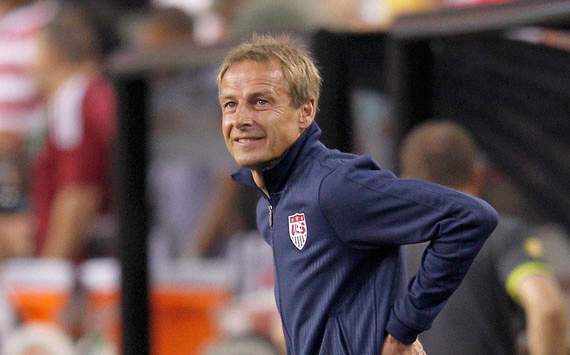
The U.S. men have struggled to find consistency in their performances from match to match under Jurgen Klinsmann, with the ever-changing lineups playing a major role.
There is nothing quite like the fierce reaction among U.S. soccer fans and pundits that meets a U.S. game lineup release. It is a phenomenon that has become beyond a given in the hour that starts when U.S. Soccer sends out its highly anticipated and quickly disseminated tweet and ends with the first kick of a given match.
The reaction during the Jurgen Klinsmann era has tended to be a bit more extreme, because there always seems to be a surprise wrinkle that keeps his selections from being deemed as completely acceptable by those who judge his every move. That aspect of the lineup release is about as consistent of a theme as there has been in his time as U.S. coach - an uneven era that has seen the highs of winning in Italy and Mexico, and the lows of struggling to score goals in an effort to reach next year's hexagonal.
The consistency issue that has plagued the national team is tied into the lack of continuity when it comes to personnel on the field. Even though there are a myriad of reasons why the U.S. men can look so prolific in routing Scotland, and then appear so lackluster at Canada and Jamaica and against a minnow like Antigua and Barbuda, one glaring explanation is the constant shuffling of lineups that has hampered the team from finding a continuous rhythm.
Klinsmann has not used the same lineup in consecutive games once in his tenure as USA boss. Some of the circumstances, such as injuries, suspensions, club form, apparent commitment issues (ahem, Mr. Chandler) and clubs refusing to release players for friendlies, are out of his control. The January camp also offers up a far different roster selection for Klinsmann than his evolving A-Team of players. While getting a look at as many players as possible is all part of Klinsmann and his coaching staff getting to know his roster pool better, the constant change can be attributed to why the USA appears to vary so drastically in its performance from match to match.
"I think for us as a coaching staff, you get your hands on the group, make the group bigger and introduce new players and you look through the system here in the U.S. with the Under-23s and Under-20s if there are young, promising players coming through then you try to get them connected to the senior team, which we did," Klinsmann told reporters at a press conference on Monday. "The entire process has a lot connected into World Cup qualifying, where the major concern is to get your points and qualify. It is a team that is growing and changing."
The closest Klinsmann came to using consecutive lineups was starting 10 of the same players in two friendlies last October and again in the two June qualifiers against Antigua and Barbuda and Guatemala, with the insertion of Fabian Johnson at left back for Jose Torres being the only change. Going into Tuesday night's CONCACAF World Cup qualifying semifinal round finale against Guatemala, Klinsmann, with an abbreviated 19-man roster due to injuries and suspension, has an opportunity to break that streak by churning out the same group that gutted out a win in Antigua, but his track record would suggest otherwise.
Follow AVI CREDITOR on
Upon replacing Bob Bradley as head coach, Klinsmann had 13 friendlies prior to the beginning of 2014 World Cup qualifying to sort out a true first-choice group and mold it into a well-oiled machine in time for the games that matter. Instead, more than 14 months into his tenure there is still not close to a 100 percent certainty as to who will line up as the front six of his changing formation, or what exactly his player pool's identity really is.
Bradley's teams relied on peak fitness, gritty defending, opportunistic scoring and set-piece proficiency. Klinsmann has tried to bring his high-octane, high-pressure system to his players, who might not completely possess the traits to alter playing styles on a dime. It does not help that the same group of players has never appeared with each other in consecutive games while trying to embrace the new philosophy.
In 17 non-January-camp matches, 27 players have earned starts (that number shoots to 36 starters in 19 matches, taking into account the January games that are played with an MLS-heavy, second-tier U.S. roster). It has not benefited Klinsmann that a vital player like Landon Donovan has been so frequently unavailable during his tenure as coach, and there is something to be said for keeping an open mind to reward deserving players who have played their way into the fold. However, managing a roster to shape cohesiveness and a rhythm can be just as vital as providing the tactics to go along with that. Klinsmann has yet to demonstrate the trust in a set group, instead shuffling around the names at his disposal while continuing his search for the winning combination.
"Over time, obviously, a team develops more fine-tuning, a better understanding, movement off the ball, certain players make certain runs and you read them better and you read them earlier," Klinsmann said. "As a coach, you always have to react to certain different challenges and also the availability of who you have. Injuries kick in like they kicked in now, and you adjust to it and give the players that come in the confidence and belief to settle in and connect to these guys."
That may be so, and simply trotting out the same XI over and over is not necessarily the fix-all answer, but then again, neither is continuing to experiment at a time when the results directly determine whether the USA will reach the World Cup for a seventh straight time. Some semblance of balance has to be struck to ensure consistency and eliminate disjointedness, and the product on the field suggests that balance has not yet been found ahead of a make-or-break year.
The consistency issue that has plagued the national team is tied into the lack of continuity when it comes to personnel on the field. Even though there are a myriad of reasons why the U.S. men can look so prolific in routing Scotland, and then appear so lackluster at Canada and Jamaica and against a minnow like Antigua and Barbuda, one glaring explanation is the constant shuffling of lineups that has hampered the team from finding a continuous rhythm.
Klinsmann has not used the same lineup in consecutive games once in his tenure as USA boss. Some of the circumstances, such as injuries, suspensions, club form, apparent commitment issues (ahem, Mr. Chandler) and clubs refusing to release players for friendlies, are out of his control. The January camp also offers up a far different roster selection for Klinsmann than his evolving A-Team of players. While getting a look at as many players as possible is all part of Klinsmann and his coaching staff getting to know his roster pool better, the constant change can be attributed to why the USA appears to vary so drastically in its performance from match to match.
"I think for us as a coaching staff, you get your hands on the group, make the group bigger and introduce new players and you look through the system here in the U.S. with the Under-23s and Under-20s if there are young, promising players coming through then you try to get them connected to the senior team, which we did," Klinsmann told reporters at a press conference on Monday. "The entire process has a lot connected into World Cup qualifying, where the major concern is to get your points and qualify. It is a team that is growing and changing."
The closest Klinsmann came to using consecutive lineups was starting 10 of the same players in two friendlies last October and again in the two June qualifiers against Antigua and Barbuda and Guatemala, with the insertion of Fabian Johnson at left back for Jose Torres being the only change. Going into Tuesday night's CONCACAF World Cup qualifying semifinal round finale against Guatemala, Klinsmann, with an abbreviated 19-man roster due to injuries and suspension, has an opportunity to break that streak by churning out the same group that gutted out a win in Antigua, but his track record would suggest otherwise.
Follow AVI CREDITOR on
Upon replacing Bob Bradley as head coach, Klinsmann had 13 friendlies prior to the beginning of 2014 World Cup qualifying to sort out a true first-choice group and mold it into a well-oiled machine in time for the games that matter. Instead, more than 14 months into his tenure there is still not close to a 100 percent certainty as to who will line up as the front six of his changing formation, or what exactly his player pool's identity really is.
Bradley's teams relied on peak fitness, gritty defending, opportunistic scoring and set-piece proficiency. Klinsmann has tried to bring his high-octane, high-pressure system to his players, who might not completely possess the traits to alter playing styles on a dime. It does not help that the same group of players has never appeared with each other in consecutive games while trying to embrace the new philosophy.
In 17 non-January-camp matches, 27 players have earned starts (that number shoots to 36 starters in 19 matches, taking into account the January games that are played with an MLS-heavy, second-tier U.S. roster). It has not benefited Klinsmann that a vital player like Landon Donovan has been so frequently unavailable during his tenure as coach, and there is something to be said for keeping an open mind to reward deserving players who have played their way into the fold. However, managing a roster to shape cohesiveness and a rhythm can be just as vital as providing the tactics to go along with that. Klinsmann has yet to demonstrate the trust in a set group, instead shuffling around the names at his disposal while continuing his search for the winning combination.
"Over time, obviously, a team develops more fine-tuning, a better understanding, movement off the ball, certain players make certain runs and you read them better and you read them earlier," Klinsmann said. "As a coach, you always have to react to certain different challenges and also the availability of who you have. Injuries kick in like they kicked in now, and you adjust to it and give the players that come in the confidence and belief to settle in and connect to these guys."
That may be so, and simply trotting out the same XI over and over is not necessarily the fix-all answer, but then again, neither is continuing to experiment at a time when the results directly determine whether the USA will reach the World Cup for a seventh straight time. Some semblance of balance has to be struck to ensure consistency and eliminate disjointedness, and the product on the field suggests that balance has not yet been found ahead of a make-or-break year.
Gerrard hits back at Vieira’s criticism of England youngsters

The former France captain claimed that the Three Lions are "not as proud as they used to be" but Roy Hodgson's captain insists that the squad remains as committed as ever
Steven Gerrard has rebuffed the Patrick Vieira’s recent criticism of the England’s younger generation.
The former Arsenal and France captain last week suggested that the country’s national footballers are "not as proud as they used to be", citing the number of young players pulling of out squads through injury as possible evidence of this change of attitude.
Roy Hodgson's England side faces Poland in Tuesday night’s World Cup Qualifier with Kyle Walker, Tom Cleverley and Jonjo Shelvey amongst the squad’s junior members.
Gerrard, however, has claimed there is no such problem, and that Vieira’s allegations have had little effect on him.
"It surprised me to read that," he told reporters on Monday. "The impression I get from young players at Liverpool is that they’re desperate to get into this set-up.
"You can see in their faces that when they’re left out, they’re really disappointed. It didn’t annoy me because I don’t really care what Patrick Vieira says. England’s young players are hungry."
The former Arsenal and France captain last week suggested that the country’s national footballers are "not as proud as they used to be", citing the number of young players pulling of out squads through injury as possible evidence of this change of attitude.
Roy Hodgson's England side faces Poland in Tuesday night’s World Cup Qualifier with Kyle Walker, Tom Cleverley and Jonjo Shelvey amongst the squad’s junior members.
Gerrard, however, has claimed there is no such problem, and that Vieira’s allegations have had little effect on him.
"It surprised me to read that," he told reporters on Monday. "The impression I get from young players at Liverpool is that they’re desperate to get into this set-up.
"You can see in their faces that when they’re left out, they’re really disappointed. It didn’t annoy me because I don’t really care what Patrick Vieira says. England’s young players are hungry."
Google privacy policy rethink demanded by EU

Google is to be told by the EU to change the way it gathers personal information if it is to avoid "high risks to the privacy of users".
Twelve recommendations were outlined in a letter signed by 24 of the EU's 27 data regulators, Reuters reported.
It follows a nine-month investigation into the company's data collection practices.
Since March, Google has combined data from sites like YouTube and Gmail to better target its advertising.
It meant 60 individual privacy policies for individual Google-owned sites were merged into a single policy for all of its services.
Reuters quoted the letter ahead of the EU's official announcement, which will take place on Tuesday.
Google has maintained the policy complies with EU law.
But regulators immediately raised concerns about the changes when they were implemented earlier this year.
The French data regulator, CNIL, was tasked by the EU to investigate the policy on behalf of the other countries in the EU.
Location data
The investigations were overseen by the Article 29 Working Party, a group of representatives from each member state tasked with promoting the application of the EU's Data Protection Directive.
It stopped short of declaring Google's data gathering practices illegal, but made clear 12 measures the company must put in place to satisfy the concerns.
"Combining personal data on such a large scale creates high risks to the privacy of users," the letter is understood to say.
"Therefore, Google should modify its practices when combining data across services for these purposes."
Those recommendations are said to include a focus on personal information and browsing records, as well as the collection of location-based data and credit card details.
On Monday, a source at Google told the BBC that the company would look closely at the recommendations, but noted that the findings were not as serious as some industry watchers had predicted.
'Unprecedented'
Auke Haagsma, a director for the Initiative for a Competitive Online Marketplace (Icomp), told the BBC that Google should have anticipated the EU's stance.
"The EU was very clear, even before Google introduced its changes, it almost certainly violated EU law."
Mr Haagsma said the agreement, which involved representatives from all of the EU member states, represented an "unprecedented" level of concern, and posed a threat to Google's future operations.
"In Google's business model there is an inherent conflict of interest," he said.
"On the one hand Google wants to offer good services to users, but on the other it's being paid for by advertising.
"Google is collecting so much data. If people realise that, they are afraid people will say no."
Gareth Bale in Ronaldo and Messi's class, says Redknapp

Harry Redknapp has warned Croatia that Wales' Gareth Bale is in the class of Cristiano Ronaldo and Lionel Messi.
Wales visit Croatia in Tuesday's World Cup qualifier and Bale's ex-club boss insists the Tottenham man is the "full package" and would "improve any team".
Bale inspired Wales to a first win of 2012 with two goals to beat Scotland.
"He's an amazing, amazing talent and he's after the Ronaldos and Messis of this world and he's getting better and better," Redknapp said.
"He's almost unplayable when he's on his game. He is a genuine world-class player.
"There's nobody he couldn't play for. He'd improve any team."
Winger Bale, whose Tottenham contract runs until 2015, has scored all of Wales' three goals in 2012 and the 23-year-old's match-winning performance against Scotland earned Chris Coleman a first win as Wales manager.
"It was amazing how he turned the game around," continued Redknapp.
"With 10 minutes to go you're looking for somebody who can do something special and Gareth can do something special.
"He can do everything and could play anywhere. He's the full package.
"He can head it, he can dribble, he can shoot, he's got a great physique, he's an amazing athlete, he can score with both feet - there are no weaknesses in his game.
"He is already at the top but any team in the world would love to have Gareth Bale playing for them.
"And he is a great lad as well with a good family behind him. It couldn't happen to a nicer lad."
Redknapp managed Bale, who was named Professional Footballers' Association Players' Player of the Year in 2010-11, during his four years at Tottenham.
And he was his boss when Bale shot to international prominence with his first hat-trick in Spurs' Champions League defeat at Inter Milan in 2010.
"It was a great performance the other night," said Redknapp.
"The one in Milan when we had 10 men, to do what he did to Maicon who, at the time, was rated as the best right-back in the world, that really destroyed his career almost. It was amazing."
Former Wales player Mickey Thomas feels Ronaldo's Real Madrid and Messi's Barcelona will soon be "fighting for Bale's signature".
"It's probably the best I've seen [from a Wales player]," said Thomas.
"I played with some great players in my career but, watching that performance, not just his goals - his ability to create opportunities for his team-mates - and when he's in that mood and when he's in that stride, he is unstoppable.
"I've seen the best. I've seen Ronaldo; I've seen them all. He's on a par with them now.
"The only difference is they play for Barcelona with players like Messi. He's at Tottenham.
"Let me tell you, he will be at one of those clubs before too long. Those top teams - Barcelona and Real Madrid - will be fighting for his signature, for sure."
Subscribe to:
Posts (Atom)